
The essential answer
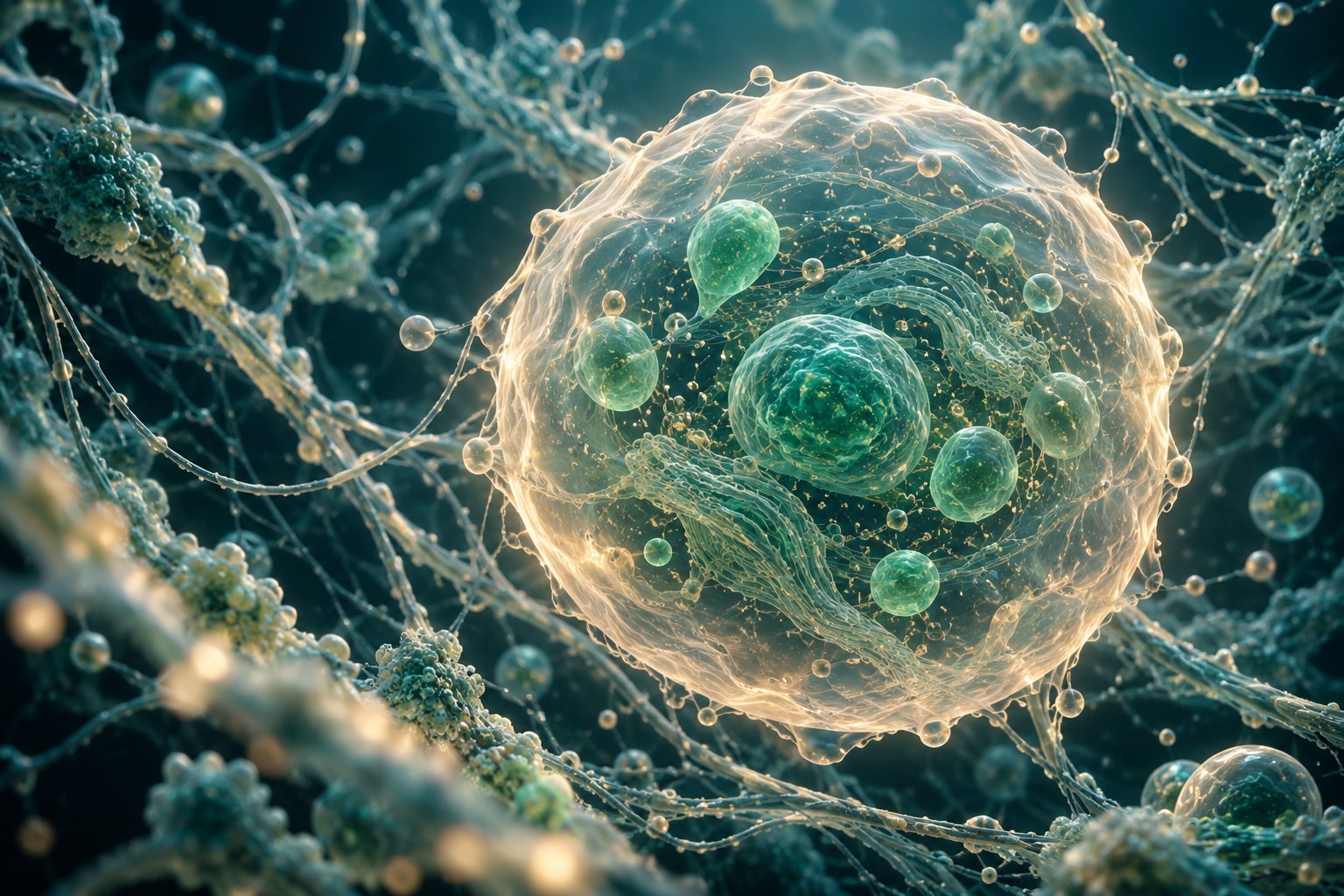
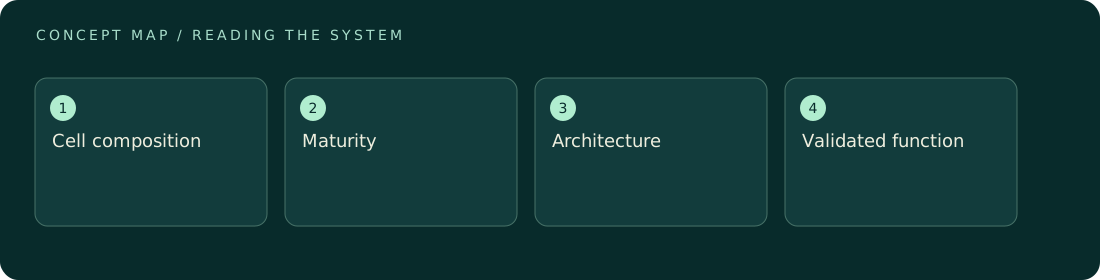
An organoid is an in vitro model that reproduces selected features of a tissue or organ. It is not automatically a miniature complete organ. Cell composition, maturation, spatial organization, and physiological interactions can differ from the reference tissue. The relevant question is whether the model captures the feature needed for a particular inference. A successful organoid readout can support a model-specific finding without establishing what would happen in a whole human body.
How to reason about it
Model validity is task-dependent. A system may be useful for studying one developmental transition while poorly representing adult function or interactions with circulation and immunity. The cited primary cortical-organoid study identified stress and subtype-specification differences relative to primary tissue, demonstrating why resemblance must be assessed rather than assumed. For original interpretation, build a claim-to-feature map: which cell types, states, structures, and outputs are necessary for the proposed conclusion? Then identify what has actually been measured. Multiple organoids from one source may still share biological and batch effects, so replication must be described at several levels. Avoid generalizing one model's strengths or limitations to all organoids. The useful conclusion is bounded to the system, timepoint, and endpoint, with missing features stated clearly rather than hidden behind the organ's name.
ILLUSTRATIVE · NOT A REPORTED RESULT
An example to work through
Assume a hypothetical model contains three of five cell classes considered essential for a particular tissue interaction. It may still answer questions about interactions among the represented classes, but it cannot directly test a mechanism requiring either missing class. Counting three out of five gives 60% coverage by class count, not 60% organ fidelity: classes differ in abundance and role. This example is a diagnostic framework, not a score for a real organoid. Functional validation would need evidence specific to the proposed use.
Where interpretation fails
A familiar shape or a few marker genes can invite an overly broad organ-level claim. Large numbers of cells do not necessarily supply missing cell types, maturity, or physiological connections. Likewise, a positive model response cannot be translated directly into human effectiveness or safety.
The next decision
State the precise feature the organoid is intended to model and the evidence validating it. Report source, batch, maturity, composition, and relevant missing interactions. Keep conclusions at the supported in vitro level and require separate evidence for any claim about intact organs or people.
Sources & context
These sources support the concepts noted below. Our synthetic examples and research framing are educational interpretation; they are not findings from these organizations or validation of our ventures.
- Cell stress in cortical organoids impairs molecular subtype specification ↗
Primary comparison identifying model-specific stress and subtype limitations.
Source check: Search-result abstract or official excerpt reviewed; full paper methods not audited
Educational research context, not a validated device specification or clinical protocol. Read our editorial and correction policy.