

The essential answer
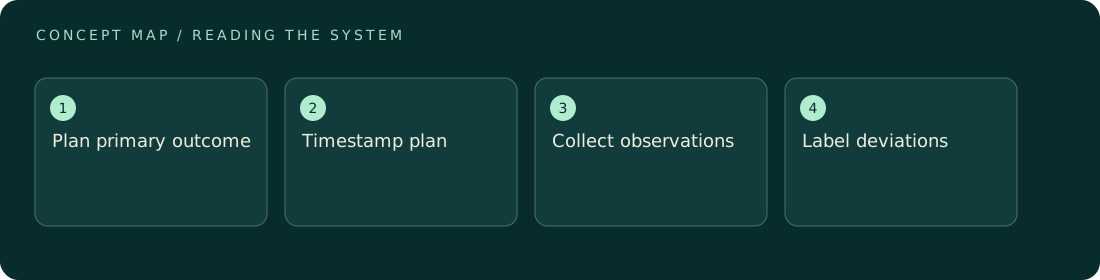
Preregistration creates a dated record of a study's intended questions, methods, and analysis before the relevant data are collected or examined. Its value is transparency about which decisions preceded the results. It does not guarantee a good design or forbid useful exploration. A practical plan identifies the primary outcome, comparison, sample or stopping rule, exclusions, and analysis sufficiently clearly that readers can assess deviations. Report later changes openly and distinguish planned tests from new questions suggested by the observations.
How to reason about it
The most useful details are choices that could change the evidential interpretation if made after seeing outcomes. Define the primary metric, treatment of missing or invalid measurements, planned comparisons, and criteria for ending data collection. Specify decision branches when conditions cannot be known in advance, such as a sensor-quality check that determines whether a run is usable. Pilot data can inform the plan, but make their role visible and separate them from the confirmatory evidence where appropriate. A registration should be specific enough to constrain interpretation without pretending that every operational event is predictable. If a necessary change occurs, preserve the original plan, date the amendment, explain its cause, and state what information was already available. Exploration remains valuable when it is labeled honestly and followed by an appropriately independent test rather than retroactively presented as an original prediction.
ILLUSTRATIVE · NOT A REPORTED RESULT
An example to work through
Suppose a fictional coating experiment plans to compare mean wear after 100 cycles using 20 specimens per group. The plan excludes runs only when the force sensor saturates and defines one primary comparison. After collecting data, the analyst notices a possible benefit at 50 cycles but not at 100. Reporting the 50-cycle pattern as exploratory preserves a useful lead. Replacing the primary outcome with 50 cycles without disclosure would misrepresent the timing of the choice. A subsequent study could preregister that new outcome. The example illustrates transparent sequencing, not evidence that either coating performs better.
Where interpretation fails
A vague registration that says appropriate analyses will be used leaves most consequential choices unconstrained. At the other extreme, treating every deviation as misconduct can discourage necessary corrections. The key is to preserve the record and explain what changed, why, and whether outcomes were known at the time.
The next decision
Preregister when a study is intended to test a specific claim and analytical flexibility could affect its apparent support. Make the plan operational and preserve amendments. Use exploratory results to generate follow-up questions, while keeping their evidential status distinct from the comparisons that were specified before the relevant outcomes were available.
Sources & context
These sources support the concepts noted below. Our synthetic examples and research framing are educational interpretation; they are not findings from these organizations or validation of our ventures.
- OSF: Registrations and Preregistrations ↗
Preregistration records a study plan before collection or analysis.
Source check: Official support HTML opened; overview inspected.
Educational research context, not a validated device specification or clinical protocol. Read our editorial and correction policy.