

The essential answer
No. A readable molecular sequence is a different outcome from a cell retaining the capacity to perform biological functions. The question is therefore not simply whether a sample was preserved, but which property remains demonstrable. A record might support sequence analysis without supporting work that requires viable cells. Conversely, a test of one cellular function would not automatically establish that every original feature survived. Preservation claims become useful when they identify the material, the intended use, and the specific observation that supports that use.
How to reason about it
Think of preservation as a set of separate questions rather than a single success label. What physical material remains? Which information can be recovered? Which functions can be demonstrated? These questions overlap, but answering one does not answer all three. NCI frames specimen quality in relation to scientific needs; that is a useful starting point for this distinction. In an educational assessment, first name the proposed future task, then ask which property it actually requires. A sequence comparison requires interpretable molecular information. A functional cell study requires additional evidence about cells. Neither a storage duration nor an impressive photograph bridges that gap by itself. The resulting evidence map should also include the date and scope of assessment, because a measurement refers to the tested material under stated conditions, not automatically to every item in a collection.
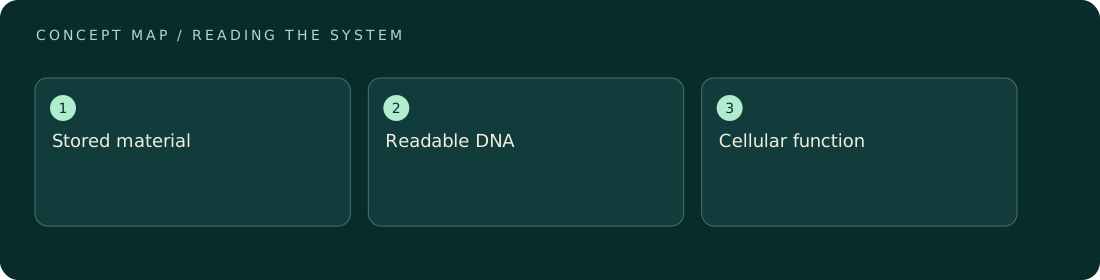
ILLUSTRATIVE · NOT A REPORTED RESULT
An example to work through
Imagine two hypothetical archive cards. Card A says that DNA from a stored sample could be read. Card B says that a defined fraction of assessed cells met a particular viability criterion. Assume both descriptions are accurate and that neither reports any other measurement. A student proposing a sequence comparison may find Card A relevant. A student proposing a cellular function study cannot substitute Card A for Card B. Even Card B needs more context before supporting that study: what criterion was used, which portion was assessed, and whether the required function was examined. These are invented records, not company results.
Where interpretation fails
Avoid turning the word intact into an all-purpose guarantee. Intact sequence, intact appearance, and intact function describe different observations. Likewise, preserved identity information does not establish preserved biological activity. Ask the author to complete the sentence: preserved sufficiently for which purpose, as shown by which evidence?
The next decision
When comparing preservation descriptions, create separate columns for identity, recoverable information, and demonstrated function. Mark absent evidence as unknown. Choose the column that matches the proposed use, and seek qualified scientific assessment before treating a stored specimen as suitable for a biological application. This page does not establish suitability.
Sources & context
These sources support the concepts noted below. Our synthetic examples and research framing are educational interpretation; they are not findings from these organizations or validation of our ventures.
- NCI Best Practices for Biospecimen Resources ↗
NCI makes specimen quality and handling dependent on the scientific needs of the resource.
Source check: Official overview opened; scope and topic list reviewed.
Educational research context, not a validated device specification or clinical protocol. Read our editorial and correction policy.